
THE METHOD
The world of overtone singing is truly vast, encompassing both technical aspects related to different vocal techniques and aspects related to ethnomusicology.
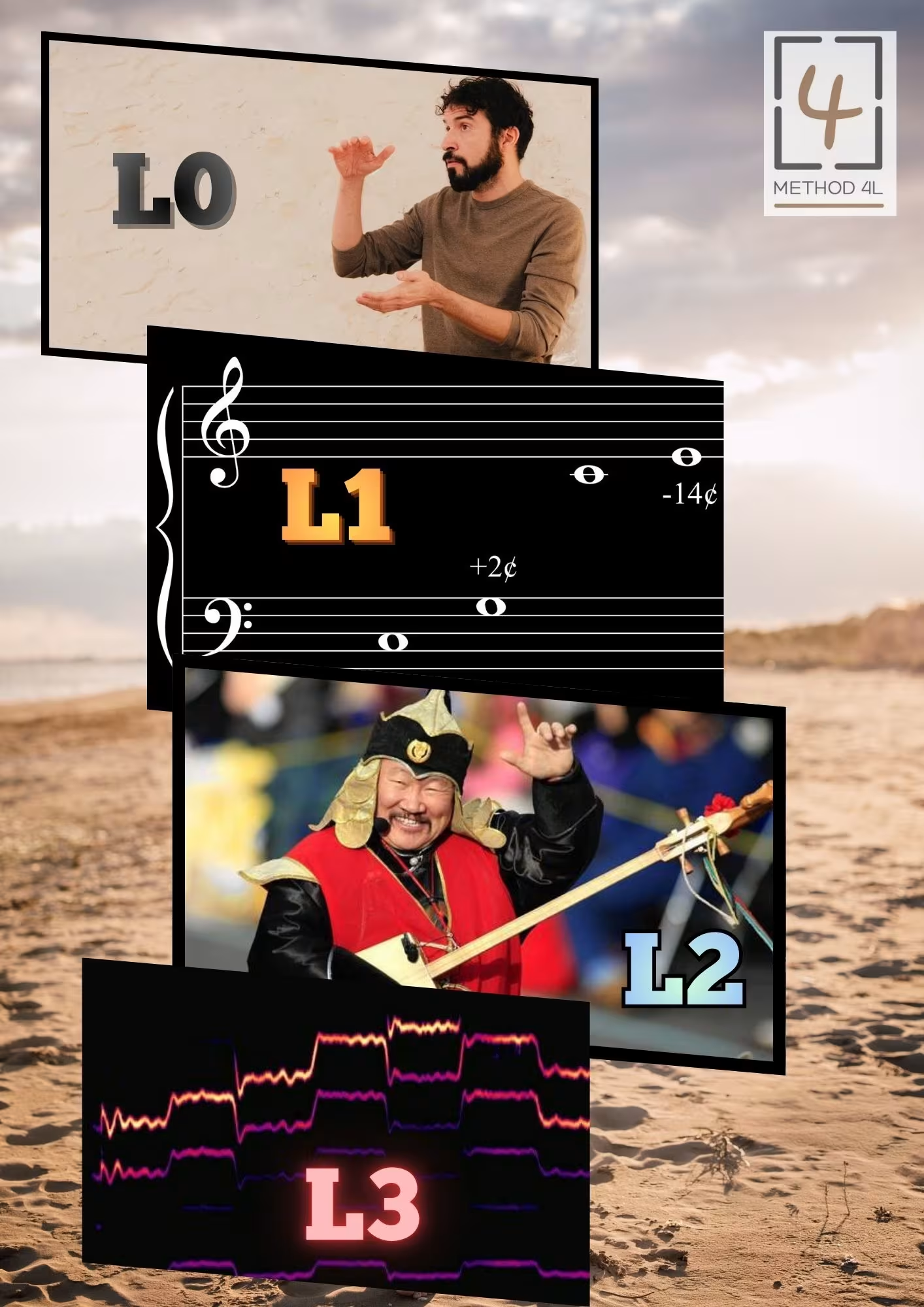
The 4L Method was created with the aim of helping people learn overtone singing, especially from the point of view of vocal technique and musicality, providing a teaching program divided into four distinct areas. Here are the four “Ls”:
L0: study of vocal timbres that highlight harmonics, first and foremost the L-technique (derived from Tuvan Sygyt), then moving on to variations (J and Ng techniques), and finally to traditional throat singing techniques from Tuva, Mongolia, and Sardinia.
L1: Study of the careful selection of each available harmonic based on the fundamental tone and the chosen technique. Study of the natural harmonic series and its musical and/or meditative applications.
L2: study of tunes that can be performed using the harmonics of a single fundamental note
L3: study of tunes that can be performed by changing the fundamental note (multitonal overtone singing).
ABOUT ME
Giovanni Bortoluzzi is a multi-instrumentalist and one of Italy’s foremost experts in overtone singing. He has studied extensively with both European and Asian masters—including Miroslav Grosser, Raphaël De Cock, David Stützel, Imre Peemot, Radik Tyulyush, and Enkhjargal Dandaarvanchig—developing a particular specialization in the Tuvan Kargyraa style. In recognition of his skill, he was awarded the distinction "For mastering the Kargyraa Technique" at the 2023 International Symposium in Tuva.
Since 2015, Bortoluzzi has been teaching overtone singing, offering training in both contemporary methods and traditional styles from Tuva. His approach combines rigorous technique with an emphasis on vocal health and ergonomic practice.
In 2024, he published his book Singing Harmonics: The 4L Method, a comprehensive guide designed to support the learning of overtone singing across both Western and Eastern traditions.
Bortoluzzi began his journey into music in 2006, as a bass player, he played Blues, Jazz, Reggae and Prog Rock, until he learnt about overtone singing for the first time in 2013. In 2015, he developed his own teaching system—the 4L Method—which has since become a reference point for students of overtone singing.
In 2016, he deepened his knowledge of traditional Tuvan throat singing (Khöömei), training with renowned masters and immersing himself in the cultural roots of the practice. A year later, he expanded his research to include the Sardinian Canto a Tenore, collaborating with a team of phoniatric specialists and undergoing laryngostroboscopic and MRI analyses. In 2018, he presented a scientific study on overtone techniques at a conference in Krakow.
Recognized for both his pedagogical clarity and expressive performance, Giovanni Bortoluzzi continues to advance the art of overtone singing, bridging ancient traditions with modern voice science.